NEW YORK: Qatar yesterday proposed the establishment of a Humanitarian Operation Force also known as HOPEFOR. Such a force would draw on existing military and civil resources (material and human) to bring hope and emergency relief quickly and efficiently to the victims of natural disasters — staying long enough to close the so-called ‘humanitarian gap’.
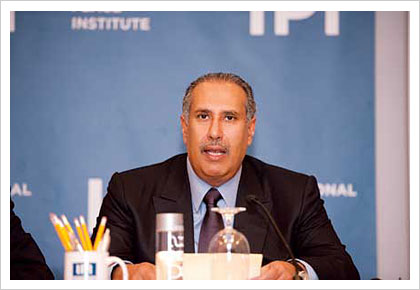
The Prime Minister and Foreign Minister H E Sheikh Hamad bin Jassem bin Jabor Al Thani made the proposal in a lecture at the International Peace Institute in New York.
Humanity suffers from natural disasters like droughts, earthquakes, floods, forest fires and tsunamis. Natural disasters like these have recently struck on all continents, leaving a trail of destruction in their wake, the Premier said, adding that no country can cope with these forces alone.
“Scientists tell us that because of climate change we can expect even more frequent natural disasters in the future. There is no way to predict where and when. But you can be sure that it is only a matter of time until the next catastrophe strikes. So, we have to ask: are we prepared?”
The Premier said disaster relief cannot just be a number of well-meaning national initiatives. “If too many ambulances rush to a catastrophe at the same time, there will be a traffic jam. This does not help those in need. Instead, there must be a clear view of the immediate needs of the ground. There must be coordination. And the necessary skills and equipment must be deployed quickly in order to save lives.”
Guidelines exist on the rapid deployment of military and civil defence assets: the so-called Oslo guidelines.
“I foresee that HOPEFOR would have a small, permanent headquarters to act as the nerve-centre for rapid deployment, to coordinate certified training, and to keep track of committed assets around the world which have been ear-marked for HOPEFOR’s possible use. It would ensure sufficient regional coverage to provide well-equipped and well-trained rapid humanitarian deployment at short notice, anywhere in the world.
“In response to a humanitarian crisis, HOPEFOR would establish a rapidly deployable field headquarters, augmented by regional experts, capable of assisting local area emergency management (together with national authorities). It would cooperate with civil society, NGOs and other humanitarian actors.
“Because HOPEFOR is different, it must look and act differently. We must recognise that, when deployed in disaster relief, the military — due to its traditional role — is sometimes perceived as a threat by local inhabitants, or civil society, even though it has the best intentions.
HOPEFOR personnel would therefore have a distinctive coloured helmet, beret, shoulder flash and vehicle marking to identify them as a visible force for good and to insist an ethic of humanitarian assistance and pride in delivering hope—among those serving in HOPEFOR operations.
“Certainly, we shall draw on the work of experts on this field. Based on the opinions made in the consultations and the expert opinion, we shall present the ideas and opinions to a meeting along the side of the next session of the General Assembly of the UN to which we shall invite all member states, in an effort to carryout the idea.
“By establishing a humanitarian operation force along these lines, I am confident that we will be in a better position to deliver hope and save lives after humanitarian disasters,” the Prime Minister said.
|
 |